
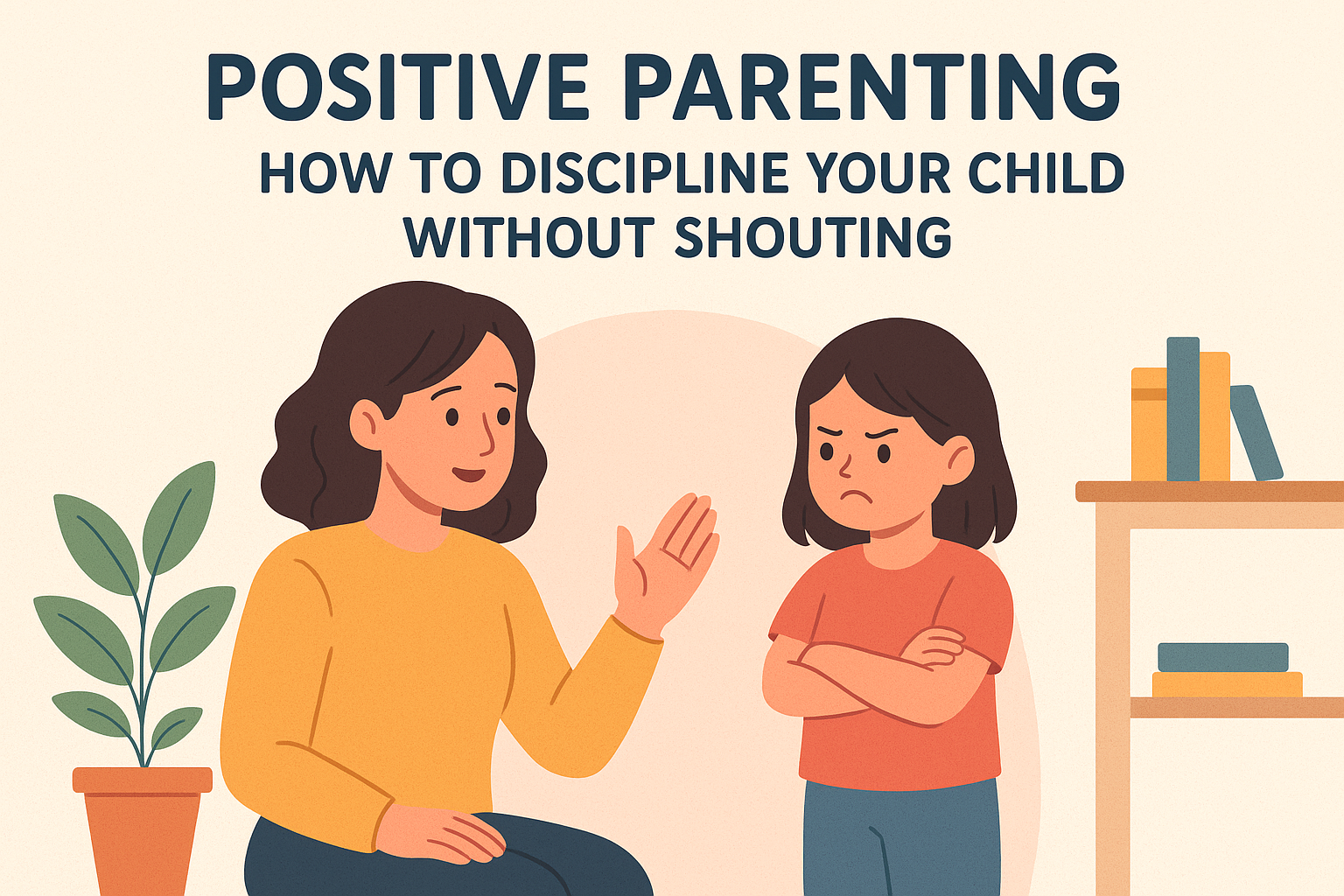
Positive Parenting: How to Discipline Your Child Without Shouting.
Parenting is one of the most rewarding roles in life — but let’s be honest, it’s also one of the most challenging. When children misbehave, it’s easy to lose patience and raise our voices. However, shouting often does more harm than good. It may stop the behaviour temporarily, but it can damage trust, reduce communication, and increase fear rather than understanding.
Positive parenting offers a healthier, calmer, and more effective approach to discipline. It’s not about letting your child do whatever they want — it’s about guiding them with clarity, respect, and connection.
Below are practical ways to discipline your child without shouting, while still maintaining authority and building a stronger bond.
1. Stay Calm: You’re the Model
Children learn more from what we do than what we say.
When you stay calm, even during chaos, you teach emotional control.
How to practice it:
- Take a deep breath before responding.
- Step away for a moment if you need to cool down.
- Remind yourself: “I’m teaching, not reacting.”
Calm parent = calm child.
2. Set Clear and Consistent Rules
Children thrive when they know what is expected of them.
Tips:
- Use simple, age-appropriate rules.
- Make routines predictable (bedtime, chores, screen time).
- Communicate rules when everyone is calm — not during conflict.
Consistency helps children feel safe and understand limits.
3. Use Positive Reinforcement
Instead of focusing only on what your child does wrong, highlight what they’re doing right.
Try this:
- Praise effort (“I love how you cleaned up your toys today!”).
- Reward positive choices with attention, not just gifts.
- Celebrate small improvements.
Positive reinforcement encourages children to repeat good behaviour.
4. Offer Choices, Not Commands
Children love a sense of control. Offering choices reduces power struggles.
Examples:
- “Do you want to brush your teeth before or after your bath?”
- “Would you like to wear the blue shirt or the red shirt?”
- “You can play for 10 more minutes or pack up now. What do you choose?”
Choices empower children while keeping you in charge.
5. Use Natural and Logical Consequences
Instead of shouting, allow consequences to teach responsibility.
Natural consequences:
- If they refuse to eat, they feel hungry later.
- If they don’t put their toy away, it might get misplaced.
Logical consequences:
- If they draw on the wall, they help clean it.
- If they throw toys, those toys are put away for a while.
Consequences teach accountability without anger.
6. Connect Before You Correct
A child who feels understood is more willing to listen.
How to connect:
- Get down to their level and maintain gentle eye contact.
- Use a soft voice.
- Validate feelings: “I see you’re upset. Let’s talk about it.”
Connection opens the door for cooperation.
7. Teach Problem-Solving Skills
Instead of telling your child what not to do, guide them toward better choices.
Ask questions like:
- “What do you think we can do differently next time?”
- “How can we fix this problem?”
- “How can you show kindness right now?”
Teaching problem-solving helps children think, not just obey.
8. Use Time-In, Not Just Time-Out
Instead of isolating your child when they misbehave, try a “time-in.”
How it works:
- Sit with them quietly.
- Help them identify their emotions.
- Talk once they’ve calmed down.
Time-in builds emotional intelligence and strengthens your bond.
9. Look for the Root Cause
Children rarely misbehave “just because.” Behaviour is communication.
Your child may be:
- Tired
- Hungry
- Overstimulated
- Seeking attention
- Feeling overwhelmed
- Struggling with something emotionally
Understanding the root helps you respond with empathy.
10. Take Care of Yourself
You can’t pour from an empty cup.
Positive parenting begins with a well-rested, emotionally balanced parent.
Self-care ideas:
- Short daily breaks
- Talking to a supportive friend
- Doing something relaxing
- Getting enough sleep
A peaceful parent creates a peaceful home.
Final Thoughts
Disciplining without shouting doesn’t mean being permissive.
It means guiding your child with patience, respect, consistency, and emotional connection. Positive parenting builds trust, strengthens your relationship, and helps your child grow into a confident, responsible adult.
Remember: your calm presence is one of the greatest gifts you can offer.


0 COMMENTS