
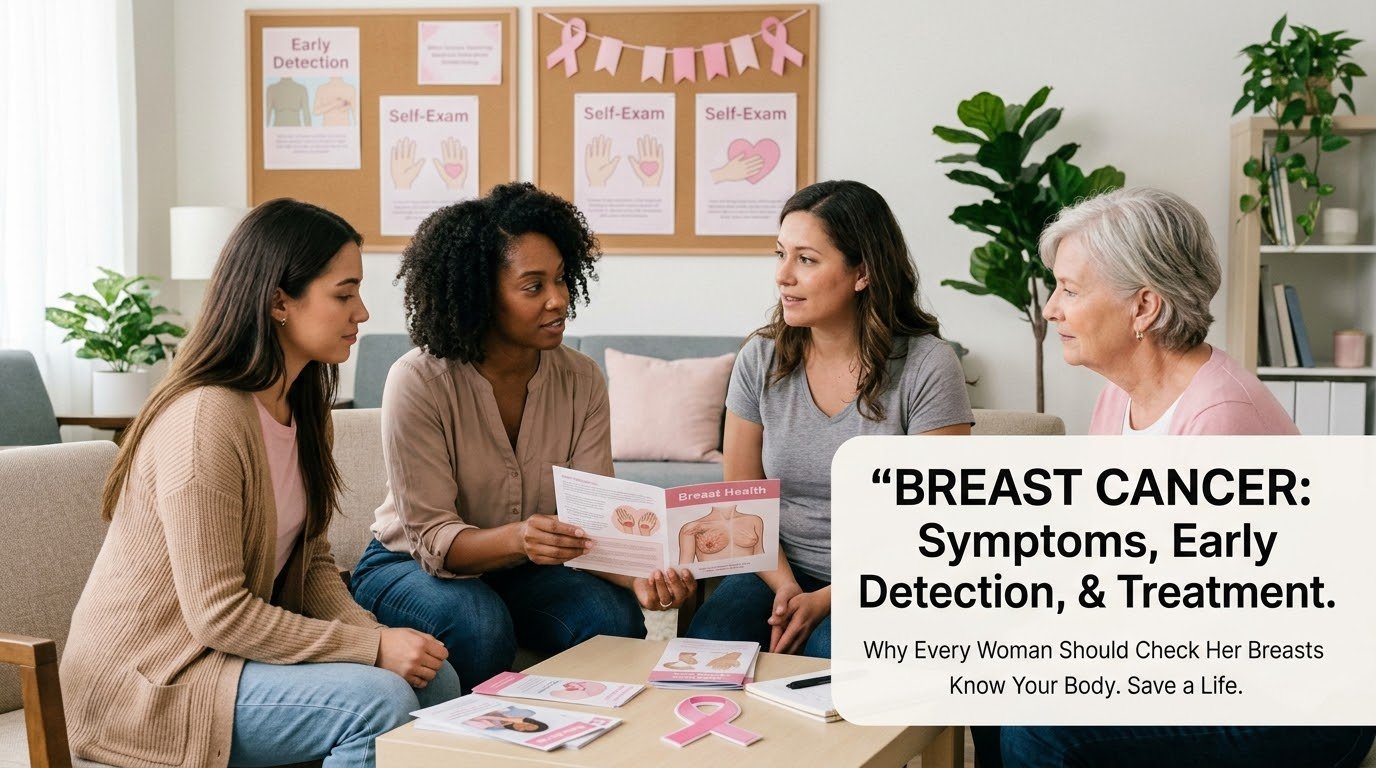
Breast Cancer: Symptoms, Early Detection, Treatment and Why Every Woman Should Check Her Breasts
Breast Cancer: Symptoms, Early Detection, Treatment and Why Every Woman Should Check Her Breasts
By True Talk Arena
Breast cancer is a serious health condition that affects millions of women around the world. Although it can be frightening to think about, understanding the warning signs, knowing how to check your breasts and seeking medical attention early can make a significant difference.
One important message every woman should remember is this: do not wait until you feel pain before paying attention to changes in your breasts. Breast cancer can develop without causing pain in its early stages.
Whether you are young or older, married or single, a mother or without children, understanding your breast health is an important part of looking after yourself.
1. What Is Breast Cancer?
Breast cancer occurs when abnormal cells in the breast grow uncontrollably and form a tumour. Some breast cancers grow slowly, while others can develop and spread more quickly to other parts of the body.
Although breast cancer is much more common in women, men can also develop it.
A diagnosis of breast cancer does not automatically mean that a person will die. Many cases can be treated successfully, particularly when the disease is detected before it has spread.
This is why awareness, early medical assessment and appropriate treatment matter.
2. Common Symptoms and Warning Signs of Breast Cancer
Every woman should understand what is normal for her breasts and pay attention to changes that are unusual.
A. A lump in the breast
A new lump or thickened area in the breast is one of the most recognised warning signs. Some lumps are painless, while others may be tender.
Not every breast lump is cancerous. Cysts and other non-cancerous conditions can also cause lumps. However, a new or unusual lump should always be assessed by a healthcare professional.
B. Changes in breast size or shape
Pay attention if one breast suddenly becomes larger, swollen or changes shape without an obvious explanation.
Some natural differences between breasts are normal. The concern is a new or persistent change.
C. Changes in the skin
Warning signs may include:
- Dimpling or puckering of the breast skin.
- Skin that looks unusually thickened.
- Redness or swelling that does not resolve.
- Skin that resembles the surface of an orange.
These changes should not be ignored, especially if they persist.
D. Changes in the nipple
Seek medical advice if you notice:
- A nipple that becomes newly inverted or turns inward.
- Persistent crusting, scaling or a rash around the nipple.
- Unexplained changes in the nipple's appearance.
E. Unusual nipple discharge
Fluid coming from the nipple when you are not breastfeeding, particularly spontaneous discharge containing blood, requires medical assessment.
F. Persistent pain or discomfort
Breast pain is common and is usually not caused by cancer. Nevertheless, persistent or unexplained pain, especially alongside other changes, should be assessed.
G. Swelling near the armpit or collarbone
Breast cancer can sometimes cause enlarged lymph nodes in the armpit or around the collarbone. A new lump or persistent swelling in these areas should be checked.
Important: These symptoms do not necessarily mean that you have breast cancer. However, do not try to diagnose yourself or wait for symptoms to become severe before seeking medical attention.
3. Why Every Woman Should Check Her Breasts Regularly
Breast awareness helps women recognise changes early and report them promptly.
Routine checks are important for several reasons.
First, they help you recognise what is normal. When you are familiar with the usual appearance and feel of your breasts, unusual changes may be easier to notice.
Second, they encourage timely medical attention. A woman who notices a new lump or skin change may seek assessment before the problem progresses.
Third, they challenge fear and embarrassment. Some women avoid discussing breast problems because they feel ashamed, fear the diagnosis or believe that only older women develop breast cancer. Open conversations can help overcome these barriers.
Fourth, they encourage preventive healthcare. Knowing your family history, discussing personal risk factors with a healthcare professional and attending recommended breast screening can help you make informed decisions.
However, breast self-checks do not replace medical examinations or mammograms. They are not proven to reduce breast cancer deaths when used as a formal monthly screening method. The goal is breast awareness and prompt assessment of changes, alongside recommended screening.
4. How to Check Your Breasts at Home
You do not need special equipment to become familiar with your breasts. The aim is to notice changes rather than perform a complicated medical examination.
Step 1: Look in a mirror
Stand with your arms relaxed by your sides. Look at the shape, size and appearance of both breasts.
Then raise your arms and look again. Notice any new swelling, dimpling, changes in skin colour or changes in your nipples.
Step 2: Feel your breasts
Using the pads of your fingers, gently feel the breast tissue, including the area extending towards the armpit.
Use a comfortable, consistent pattern so you become familiar with the whole area. You can do this while standing, sitting or lying down.
Step 3: Check for unusual changes
Pay attention to new lumps, thickening, persistent tenderness, swelling or nipple changes.
There is no need to squeeze the breasts aggressively or repeatedly press an area to determine whether it is cancerous. You cannot establish that at home.
Step 4: Know when to seek medical help
If you discover something new or unusual, arrange an appointment with a healthcare professional. Do not wait for your next routine screening appointment if you have symptoms.
If you menstruate, your breasts may feel lumpier or more tender around your period. Some women find it easier to become familiar with their breasts at a time when hormonal tenderness is less pronounced.
Remember, there is no single self-check technique that can reliably rule out breast cancer.
5. Who Is at Risk of Developing Breast Cancer?
Breast cancer can affect women without any known risk factors. Nevertheless, some factors increase the likelihood of developing it.
These include:
- Increasing age.
- A strong family history of breast or certain related cancers.
- Inherited genetic changes, such as BRCA1 or BRCA2 variants.
- A personal history of breast cancer or certain breast conditions.
- Previous radiation treatment to the chest at a young age.
- Certain hormonal and reproductive factors.
- Alcohol consumption, excess body weight after menopause and physical inactivity.
Having a risk factor does not mean you will develop breast cancer. Equally, having no family history does not guarantee that you will never develop it.
Women with a strong family history or known inherited genetic risk should discuss personalised screening and risk-reduction options with a healthcare professional.
6. What Are the Remedies and Treatments for Breast Cancer?
It is essential to distinguish between treatment for breast cancer and lifestyle measures that support general health.
There is no proven home remedy, herbal mixture, special diet or supplement that cures breast cancer. Anyone who suspects breast cancer should seek medical assessment rather than relying on traditional remedies or waiting for symptoms to disappear.
Treatment depends on the type of cancer, its stage, whether it has spread, the tumour's biological characteristics and the person's overall health.
A. Surgery
Surgery may remove the cancer while preserving as much breast tissue as possible, or it may involve removing the entire breast. The appropriate option depends on the individual case.
B. Radiotherapy
Radiotherapy uses carefully targeted radiation to destroy cancer cells. It may be recommended after surgery or in other circumstances.
C. Chemotherapy
Chemotherapy uses medicines to kill cancer cells or stop them from growing. It may be given before or after surgery, depending on the treatment plan.
D. Hormone therapy
Some breast cancers grow in response to hormones such as oestrogen. Hormone-blocking treatments can help manage these cancers and reduce the risk of recurrence.
E. Targeted therapy and immunotherapy
Certain medicines target specific features of cancer cells. Some patients may benefit from targeted treatments or immunotherapy, depending on the tumour type and clinical circumstances.
F. Supportive care
Emotional support, pain management, nutritional guidance and help with treatment side effects are also important parts of cancer care.
Breast cancer treatment has advanced considerably, and treatment plans are increasingly tailored to each patient. A qualified cancer team can explain the available options, likely benefits, risks and expected outcomes.
7. Can Breast Cancer Be Prevented?
No method can guarantee that a woman will never develop breast cancer. However, some steps can reduce certain risks and support overall health.
- Maintain a healthy weight, particularly after menopause.
- Participate in regular physical activity.
- Limit or avoid alcohol.
- Discuss the benefits and risks of hormonal medicines with your clinician.
- Understand your family history and discuss genetic assessment if appropriate.
- Attend breast screening when invited or when recommended based on your individual risk.
Breastfeeding is associated with a lower risk of breast cancer, although it cannot guarantee protection.
Most importantly, prevention advice must never create a false sense of security. Healthy women can still develop breast cancer, so awareness and appropriate medical assessment remain essential.
8. When Should You Have a Mammogram?
A mammogram is an X-ray examination of the breast used to detect abnormalities, sometimes before they can be felt.
There is an important difference between screening and diagnostic testing.
- Screening mammography is offered to people without breast symptoms to look for signs of cancer.
- Diagnostic assessment investigates a symptom, such as a lump or nipple discharge. It may involve a clinical examination, ultrasound, mammography or a biopsy.
If you live in England, the NHS Breast Screening Programme routinely invites eligible women aged 50 to 71 for screening, generally every three years. Some women outside this age range may be eligible through other arrangements or may need individual advice.
If you notice a suspicious change, do not wait until you are eligible for screening or receive your next invitation. Contact your GP promptly.
9. Breaking the Silence Around Breast Cancer
Fear, embarrassment, misinformation and financial difficulties can prevent women from seeking help.
Some women believe that a breast lump automatically means cancer. Others fear that talking about the disease will bring bad luck or that a diagnosis means certain death. Neither belief should stop someone from seeking medical advice.
Families, partners, community leaders, healthcare workers and charities all have a role in encouraging women to take their health seriously.
We must create an environment where women can discuss breast health without shame, support those undergoing treatment and encourage anyone experiencing warning signs to seek professional help.
A woman should never be mocked for checking her breasts, nor should she be discouraged from seeking medical care because of fear or stigma.
10. A Message to Every Woman
Your health matters. You deserve to understand your body, ask questions and receive appropriate medical care.
Take time to become familiar with your breasts. Pay attention to new changes. Attend recommended screening. If something concerns you, seek medical advice rather than hoping it will disappear.
And if you know a woman who has been avoiding a breast examination because she is frightened, encourage her with compassion. She needs support, not judgement.
Early detection does not guarantee a cure, but recognising symptoms and obtaining timely assessment can make a real difference.
Do not wait for pain. Do not allow embarrassment to silence you. Do not let fear prevent you from taking the next step.
Check. Know. Speak up. Seek help. Your health is worth it.
---
Frequently Asked Questions
1. Can breast cancer develop without pain?
Yes. Breast cancer can develop without pain, particularly in its early stages. A painless lump or another unusual change still needs medical assessment.
2. Can young women develop breast cancer?
Yes. The risk increases with age, but younger women can also develop the disease. A new or unusual breast change should be assessed regardless of age.
3. Does every breast lump mean cancer?
No. Many breast lumps are benign, but it is important to have a new lump assessed by a healthcare professional.
4. Can herbs or natural remedies cure breast cancer?
There is no reliable evidence that herbs or home remedies cure breast cancer. Some supplements can also interfere with cancer treatment. Discuss any complementary products with your cancer team.
5. If I have no family history of breast cancer, am I safe?
No. Many people diagnosed with breast cancer have no known family history. Everyone should be aware of symptoms and follow appropriate screening advice.
6. What should I do if I notice a lump today?
Contact your GP or healthcare provider promptly for an assessment. Do not wait for your next screening invitation, and do not rely on self-examination to determine whether the lump is cancerous.
Medical Disclaimer
This article is for general educational purposes only and is not a substitute for professional medical advice, diagnosis or treatment. If you notice a breast lump or another concerning change, seek assessment from a qualified healthcare professional.
Suggested Resources
For reliable information and further guidance, consult:
- NHS: https://www.nhs.uk/conditions/breast-cancer/
- Cancer Research UK: https://www.cancerresearchuk.org/about-cancer/breast-cancer
- World Health Organization: https://www.who.int/news-room/fact-sheets/detail/breast-cancer
True Talk Arena | Awareness, Education and Empowerment
Share this article with the women in your life. A conversation today could encourage someone to seek the care she needs.


0 COMMENTS